


Oyo State was pushed dangerously close to a major political upheaval last week, as tensions within its power structure spilled into the open. What began as quiet disagreements soon evolved into a complex web of accusations involving impeachment plots, alleged financial inducements running into billions, internal party rivalries, and even claims of interference in the traditional institution of Ibadanland.
At the heart of the unfolding drama were key figures including Seyi Makinde, Adebo Ogundoyin, and the Olubadan of Ibadanland, Rashidi Ladoja. The situation was further complicated by comments from Ayo Fayose, whose remarks intensified an already volatile atmosphere.
What initially appeared to be minor disagreements within the Oyo State House of Assembly quickly escalated into a broader political crisis, raising concerns about the stability of both the legislative and executive arms of government, as well as the role of traditional leadership in the state.
The tension became evident during what was expected to be a routine caucus meeting of the Peoples Democratic Party (PDP) within the Assembly. Instead of proceeding smoothly, the meeting reportedly descended into a heated confrontation. Lawmakers were said to be sharply divided, with disagreements centering on alleged plans to remove the Speaker and the wider implications such a move could have on the state’s political balance.
Those present described the atmosphere as tense and charged, with members forming opposing camps. While some lawmakers resisted any attempt to remove the Speaker, viewing it as unjustified, others were believed to be aligned with forces advocating for a leadership change. Although there was no concrete evidence publicly presented, suspicions grew that certain influential figures within the governor’s political circle might have been backing moves to either force the Speaker’s resignation or orchestrate his removal. These claims, whether accurate or not, deepened fears of an internal power struggle within the ruling party.
Alongside the leadership tussle in the Assembly came an even more alarming allegation—that there were plans underway to impeach Governor Makinde himself. Reports suggested that the plot involved financial inducements amounting to as much as one billion naira, a claim that sent shockwaves through political circles in the state. The possibility of a direct confrontation between the executive and legislative arms of government raised concerns about a potential constitutional crisis.
However, individuals named in connection with the alleged plot quickly distanced themselves from the claims. Among them was Florence Ajimobi, former First Lady of Oyo State, who strongly denied any involvement. She described the allegations as entirely false and politically motivated, insisting that she neither attended nor participated in any meeting where such plans were discussed. According to her, the claims were part of a deliberate attempt to tarnish her reputation. She also cautioned that the spread of such misinformation could inflame tensions further and indicated she might pursue legal action if necessary.
In a surprising development, Speaker Ogundoyin confirmed that he had indeed been approached with an offer of financial inducement tied to impeachment-related plans. However, he stated firmly that he rejected the offer without hesitation. He emphasized that his principles were not for sale and reaffirmed his commitment to maintaining the integrity of the Assembly. He also dismissed claims that he had accepted funds from opposition-linked actors, describing such assertions as baseless and politically driven.
Ogundoyin reiterated his loyalty to the governor and the ruling party, stressing that he would not support any move capable of destabilizing the government. His stance helped to counter some of the speculation surrounding his role in the crisis, though it did little to immediately calm the broader political tension.
Behind the scenes, however, some insiders suggested that the impeachment narrative may have been a distraction from a deeper agenda. According to sources within the Assembly, the real target of the unfolding crisis may have been the Speaker himself. His growing political profile, coupled with speculation about his future governorship ambitions, was said to have unsettled certain power blocs within the state.
It was gathered that Ogundoyin had recently visited the Olubadan to discuss his political aspirations and seek royal support, a move that reportedly raised concerns among some lawmakers. For those wary of his rising influence, this step may have signaled a need to curtail his political trajectory before it gained further momentum.
Sources also indicated that attempts may have been made to place the Speaker in situations that could strain his relationship with the governor. By creating distrust between the two leaders, those behind such moves could potentially weaken his position and pave the way for a leadership change within the Assembly.
Despite these pressures, Ogundoyin was said to have acted cautiously, avoiding decisions that might create friction with the governor. His measured approach may have played a role in preventing the situation from escalating further.
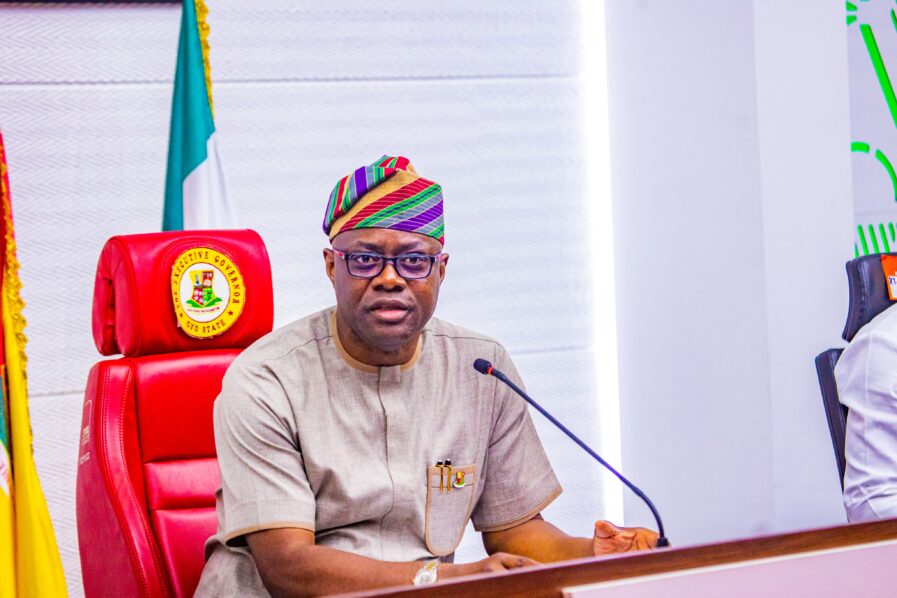
Amid growing uncertainty and anxiety across the state, Governor Makinde eventually stepped in to address the crisis directly. He convened an emergency meeting with lawmakers, a move that proved pivotal in restoring calm. During the meeting, the governor reportedly made his position clear, emphasizing the need for unity and stability within the Assembly.
Following the intervention, sources indicated that lawmakers agreed to align with the existing leadership structure under the Speaker. The governor’s directive effectively halted any ongoing impeachment efforts and helped to restore a sense of order within the legislature. Normal legislative activities are now expected to resume, signaling a temporary resolution to the immediate crisis.
While tensions within the Assembly were being addressed, another controversy emerged from Ibadan’s traditional institution. Former Ekiti State Governor Ayo Fayose publicly alleged that Governor Makinde was planning to remove the Olubadan from his position. The claim added a new dimension to the already complex situation, drawing the traditional institution into the political spotlight.
Fayose maintained that his statements were based on credible information, suggesting that recent developments supported his claims. He warned that such actions, if true, could damage the governor’s legacy and further destabilize the state’s political environment.
In response, the Olubadan adopted a more measured tone, downplaying the allegations and describing much of the circulating information as mere speculation. He questioned the logic behind some of the claims, including suggestions that he might be involved in moves against the governor. While acknowledging the confusion surrounding recent events, he expressed confidence that any misunderstandings would eventually be resolved.
Efforts to clarify the situation also came from other quarters. Speaker Ogundoyin explained that his visit to the Olubadan had taken place weeks earlier and was strictly for consultation regarding his governorship ambition. He stressed that the meeting had no connection to any impeachment plot or political maneuvering.
Similarly, Shola Ladoja, the monarch’s son, confirmed that while the meeting had political elements, it was unrelated to the allegations of financial inducement or attempts to destabilize the government.
The Oyo State Commissioner for Information, Dotun Oyelade, also weighed in, stating that the government was still reviewing the situation and would respond appropriately in due course.
For many observers, the events of the past week highlight the fragile nature of political alliances within Oyo State. Beneath the surface of party unity lies a complex struggle for influence, where ambition, loyalty, and competing interests often collide.
The crisis also underscores how quickly political tensions can escalate when fueled by speculation, mistrust, and unresolved rivalries. From claims of billion-naira inducements to fears of institutional interference, the situation revealed just how delicate the balance of power in the state has become.
Although the immediate crisis appears to have been contained for now, the underlying issues remain unresolved. The interplay between political ambition, party dynamics, and traditional authority continues to shape the state’s political landscape, leaving many to wonder whether the calm that has returned is only temporary.