


Africa’s wealthiest industrialist, Aliko Dangote, has revealed plans to construct a new 650,000-barrels-per-day oil refinery in East Africa, marking a bold step to expand his refining operations beyond Nigeria. The move underscores a broader continental effort to reduce dependence on imported fuel and strengthen local production capacity.
Dangote shared this vision while speaking at the Africa We Build Summit held in Nairobi. The event, organised by the Africa Finance Corporation, brought together political leaders and industry stakeholders to discuss Africa’s development priorities. During a presidential panel session, Dangote emphasized that his company is prepared to replicate the scale and operational model of its Lagos refinery in East Africa—provided governments in the region offer the necessary backing.
He made a direct appeal to East African leaders, urging them to support the initiative, which he believes could transform the region’s fuel supply landscape. His proposal aligns with ongoing efforts by countries such as Kenya, Uganda, and Tanzania to establish a shared refining hub in the Tanzanian port city of Tanga. The planned hub is expected to process crude oil sourced from across the region, including supplies from the Democratic Republic of Congo and South Sudan.
Expressing confidence in the project, Dangote pointed to his experience delivering the 650,000bpd refinery in Lagos as proof of feasibility. According to him, replicating such a facility in East Africa is well within reach. He assured regional leaders that once there is firm governmental commitment, his group is ready to take the lead in executing the project, stressing that the groundwork for success has already been demonstrated in Nigeria.
Beyond East Africa, Dangote also disclosed that his company is scaling up its refining capacity at home. Expansion work is already underway to increase output at the Lagos facility to 1.4 million barrels per day. When completed, the upgraded plant is expected to become the largest refinery in the world, significantly boosting Africa’s contribution to global refining capacity. Dangote noted that the expansion would also enhance petrochemical production, further strengthening industrial linkages.
A central theme of his remarks was the need for Africa to achieve greater industrial independence. He warned that continued reliance on imported petroleum products leaves economies vulnerable to global price fluctuations and supply disruptions. To illustrate this, he cited recent volatility in the petrochemical market, particularly in the price of polypropylene—a key material used in packaging and manufacturing. Within a short period, prices surged dramatically, creating pressure on industries dependent on the material. According to Dangote, such shocks highlight the urgency of building robust local production systems.
He also highlighted improvements in Africa’s financial landscape, noting that funding for large-scale projects is now more accessible than in the past. Recalling earlier challenges, he explained that high interest rates once forced companies to depend heavily on international lenders. Today, however, stronger regional financial institutions and a more supportive investment climate have made it easier to finance ambitious infrastructure projects.
In a move aimed at broadening participation, Dangote announced plans to open up ownership of his refinery business to African investors. He said the initiative would allow individuals and institutions across the continent to invest in critical infrastructure while earning returns in foreign currency. This approach, he added, would not only deepen capital markets but also foster a sense of shared ownership in transformative projects.
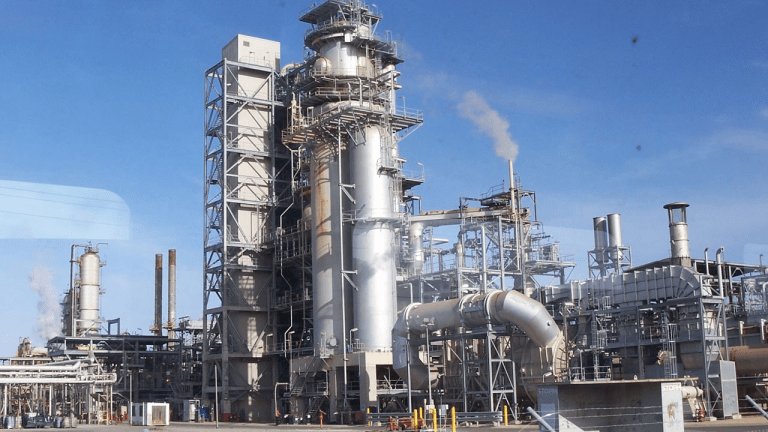
Regarding timelines, Dangote indicated that the proposed East African refinery could be completed within four to five years once agreements are finalized. He stressed that collaboration among multiple governments would be key to accelerating the process and ensuring timely delivery.
Supporting this vision, William Ruto confirmed that discussions are already underway between regional governments and Dangote’s group. He revealed that plans for a joint refinery in Tanga are progressing, with the facility expected to serve several countries by processing crude oil from Kenya, Uganda, South Sudan, and the Democratic Republic of Congo. As part of the broader infrastructure plan, a pipeline linking the Kenyan coastal city of Mombasa to Tanga is also being considered to ensure a steady supply of crude to the refinery.
The urgency behind these initiatives is clear. Current industry estimates suggest that roughly three-quarters of refined petroleum products consumed in East and Southern Africa are imported, primarily from the Middle East. This dependence exposes the region to supply chain disruptions and price volatility, particularly during periods of geopolitical tension.
Recent global uncertainties, including disruptions tied to tensions involving Iran, have further highlighted Africa’s vulnerability to external shocks. These developments have strengthened the case for investing in local refining capacity as a means of safeguarding energy security.
At the same time, individual countries are pursuing their own refining ambitions. Uganda, for instance, has already taken steps toward building a 60,000bpd refinery through a partnership with UAE-based investors. Such efforts reflect a growing recognition across the continent of the importance of energy self-sufficiency.
Dangote’s expansion plans build on the successful launch of his Lagos refinery, which began operations in 2024. The facility, widely regarded as the largest in Africa, is designed not only to meet Nigeria’s domestic fuel needs but also to export surplus products to other markets. Its development is seen as a major milestone in the continent’s push to transition from being a net importer of refined petroleum products to becoming a key refining hub.
In addition to refining, Dangote outlined plans to expand into agriculture-related industries by establishing approximately 20 fertiliser blending plants across Africa by 2028. This initiative is expected to support food production and strengthen the continent’s industrial value chain.
Energy analysts believe that if the proposed East African refinery becomes a reality, it could significantly reshape the region’s fuel supply dynamics. By reducing dependence on imports and boosting local processing capacity, the project has the potential to enhance energy security, stabilise prices, and drive economic growth across multiple sectors.