


President Bola Ahmed Tinubu has approved a N3.3 trillion plan to clear long-standing debts owed to Nigeria’s power generation and gas companies, a move aimed at tackling the chronic liquidity challenges in the country’s electricity sector.
The presidency confirmed that this decision follows a comprehensive verification and reconciliation of legacy obligations accumulated from February 2015 to March 2025 under the Presidential Power Sector Financial Reforms Programme. Authorities believe the intervention will significantly improve cash flow within the electricity market, particularly for generation companies (Gencos) and gas suppliers, who have struggled with persistent payment delays that have hindered generation capacity and overall system performance.
The accumulation of debt in the power sector traces back to structural weaknesses that emerged after the 2013 privatization of Nigeria’s electricity industry. In the current framework, Gencos sell electricity to the Nigerian Bulk Electricity Trading Plc (NBET), which then distributes power to the distribution companies (Discos). However, poor revenue collection by Discos, driven by inadequate metering, energy theft, and weak tariff enforcement, has meant that only a fraction of invoices issued is ever settled. This shortfall has prompted government interventions in the form of subsidies.
The problem is further compounded by the government’s long-standing reluctance to implement cost-reflective tariffs. Electricity prices have often been set below the actual cost of generation and supply, largely due to political sensitivities, resulting in a persistent funding gap. Consequently, NBET has been unable to fulfill its payment obligations to Gencos, leading to a debt estimated at around N6 trillion.
The liquidity crisis has had ripple effects across the entire power value chain. Gencos, facing cash flow constraints, often struggle to maintain plants or pay gas suppliers, which in turn limits generation capacity despite installed infrastructure. Gas producers, wary of delayed payments, have sometimes reduced supply to power plants, further worsening electricity outages. In recent weeks, these disruptions have been particularly pronounced.
Investor confidence in the sector has been undermined, slowing critical investments. At the same time, inconsistent grid supply has forced businesses and households to rely heavily on self-generation, driving up production costs and contributing to inflationary pressures.
According to a statement from the presidency issued by Special Adviser Bayo Onanuga, the N3.3 trillion represents a full and final settlement of debts, providing a transparent and equitable resolution for all stakeholders. As part of the implementation process, 15 power generation companies have already signed agreements with the federal government covering N2.3 trillion of the total amount.
The government has raised N501 billion to kick-start the settlement, with N223 billion already disbursed and further payments ongoing. Officials expect that as funds begin circulating through the sector, generation stability will improve, ultimately enhancing electricity supply to homes and businesses.
President Tinubu praised stakeholders for their role in resolving the sector’s long-standing issues and indicated that a second phase of the programme is expected to begin later this quarter. The official statement emphasized that this initiative is not merely about clearing debts but is also a strategic effort to strengthen the power sector’s financial foundation.
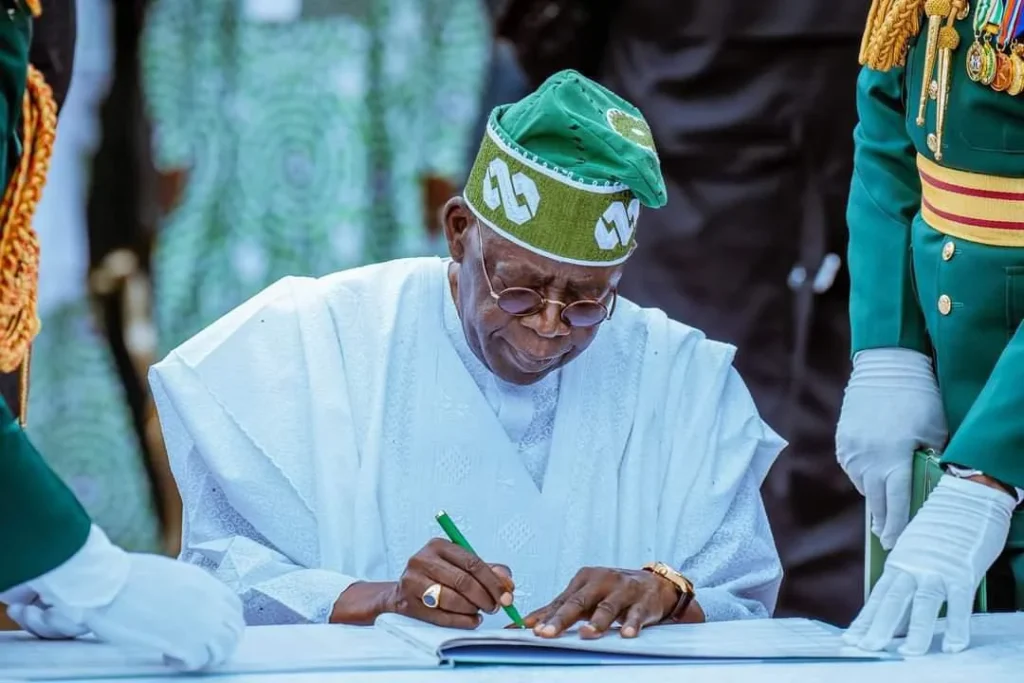
“The long-standing debts, which accumulated between February 2015 and March 2025, have now been fully verified. N3.3 trillion has been agreed as a full and final settlement, ensuring a fair and transparent resolution,” the statement read.
The Special Adviser to the President on Energy, Olu Verheijen, highlighted that the programme is part of a broader reform agenda designed to restore confidence in the power sector. Beyond debt settlement, the plan aims to guarantee that gas suppliers are paid, power plants remain operational, and electricity generation becomes more reliable.
Verheijen noted that the reforms also include initiatives such as improved metering and the introduction of service-based tariffs, linking electricity pricing to the quality of supply received by consumers. The government is prioritizing reliable electricity for businesses, industries, and small enterprises, recognizing that consistent power is essential for job creation, economic growth, and supporting livelihoods.
“This programme is not just about settling legacy debts. It is about restoring confidence across the power sector, ensuring gas suppliers are paid, power plants can keep running, and the system begins to operate more reliably. It is part of a broader reform agenda, including better metering and service-based tariffs that connect what you pay to the quality of electricity received. The government is also focusing on reliable supply for businesses and industries because consistent power is vital for job creation, economic growth, and supporting livelihoods,” Verheijen said.
Nigeria’s installed generation capacity is officially around 13,000 megawatts (MW), yet actual available capacity typically ranges between 4,000 MW and 5,500 MW, depending on gas supply, grid stability, and plant conditions. In practice, average daily generation often hovers around 4,000 MW, serving a population exceeding 200 million. By comparison, South Africa, with roughly a quarter of Nigeria’s population, consistently generates over 20,000 MW. On a per capita basis, Nigeria produces roughly 20–25 watts per person, far below the global average of more than 1,000 watts per person in industrialized nations.
Transmission constraints remain a significant bottleneck. The grid, managed by the Transmission Company of Nigeria (TCN), has a wheeling capacity of about 8,000 MW but rarely sustains this due to frequent system collapses and operational constraints. Multiple grid collapses each year further disrupt electricity supply nationwide.
Distribution challenges are even more severe. Nigeria’s 11 distribution companies collect only about 60–70 percent of billed revenue on average. Aggregate Technical, Commercial, and Collection (ATC&C) losses remain high, often exceeding 40 percent in some networks. This means a substantial portion of electricity supplied is either lost, stolen, or unpaid for, perpetuating the financial strain on the sector.
The government’s N3.3 trillion settlement plan is therefore seen as a critical step toward stabilizing the sector, improving investor confidence, and supporting more reliable electricity supply for homes and businesses. By addressing historical financial imbalances, ensuring payments to Gencos and gas suppliers, and implementing complementary reforms such as better metering and service-based tariffs, the administration aims to create a more sustainable, efficient, and reliable power sector that can drive economic growth and improve quality of life for Nigerians.
With the payments underway, the hope is that power generation will stabilize, businesses will benefit from consistent electricity, and the sector will attract renewed investment. The overarching goal remains clear: stronger electricity supply, improved service delivery, and a more resilient power sector that meets the needs of Nigeria’s population and economy.