


Nearly thirty years after his death, Fela Anikulapo-Kuti remains a towering figure in global music and culture. In 2026, he became the first African artist to receive the Grammy Lifetime Achievement Award, a testament to his enduring influence. This honor places him among iconic legends such as The Beatles, Earth Wind and Fire, and Donny Hathaway.
The award, presented by the Recording Academy, celebrates artists who have made significant and lasting contributions to the art of recording. Fela’s children—Yeni, Femi, and Kunle—accepted the award on his behalf at the 68th Grammy Awards held in Los Angeles. This recognition reaffirms Fela’s role not only as a pioneering musician but also as a profound cultural and political force.
Fela is widely credited with inventing Afrobeat, a dynamic genre that blends traditional Nigerian rhythms with elements of jazz, funk, highlife, and soul. Over his career, he wrote and performed more than 200 songs, using his music to confront issues like military oppression, social injustice, and neo-colonialism. His outspoken activism earned him both admiration and severe persecution. Notably, a brutal 1977 military raid on his Kalakuta Republic commune resulted in the death of his mother, Funmilayo Ransome-Kuti, a respected Pan-Africanist who deeply influenced his worldview.
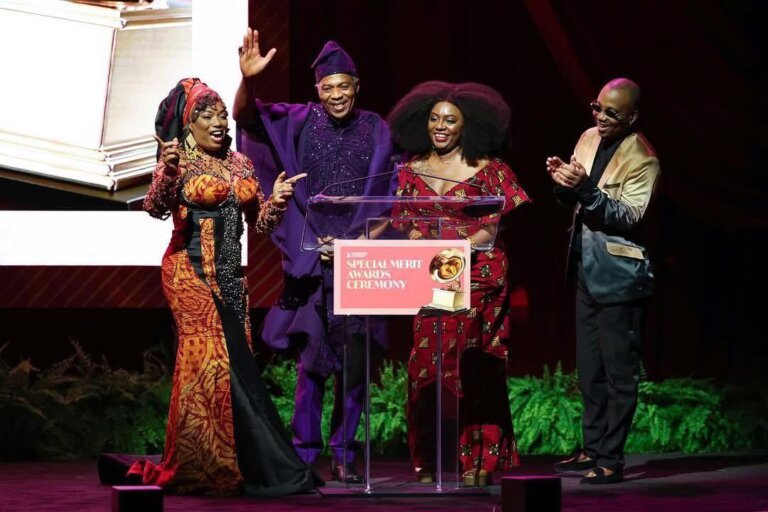
In 2025, Fela’s groundbreaking 1976 album Zombie was inducted into the Grammy Hall of Fame, recognized for its powerful critique of Nigeria’s military regime and its lasting historical importance. His sons, Femi and Seun Kuti, accepted this honor, highlighting how their father’s music continues to resonate worldwide, inspiring unity and resistance.
The Kuti family legacy extends beyond Fela himself. His sons and grandson have collectively earned eight Grammy nominations, with Femi receiving six in World and Global Music categories, Seun nominated for Best World Music Album, and Made Kuti also recognized. This ongoing recognition underscores the family’s influential presence in contemporary music.
Born in 1938 in Abeokuta, Nigeria, Fela’s formal music education at London’s Trinity College of Music laid the foundation for his innovative style. More than just an artist, he was a revolutionary who transformed his music into a vehicle for social change. His venues, like the Afrika Shrine, became hubs of cultural expression and political activism.
Despite facing relentless challenges, Fela’s dedication to Pan-African ideals and fearless critique of power structures left an indelible mark on music and society, making him an enduring symbol of artistic courage and cultural pride.