


The Federal Executive Council has given the green light to three large-scale Public-Private Partnership (PPP) projects valued at more than ₦6.43 trillion, marking another major step in Nigeria’s efforts to attract private investment into critical infrastructure development.
The approved projects comprise two deep seaports and a 460-megawatt hydropower plant. Together, they represent the second set of PPP initiatives endorsed by the Council within the space of one month, highlighting the administration of President Bola Ahmed Tinubu’s determination to position private capital as a key engine of economic growth under the Renewed Hope Agenda.
The approvals were disclosed in a statement issued on Friday by the Director-General of the Infrastructure Concession Regulatory Commission (ICRC), Jobson Ewalefoh. According to him, the projects stand as one of the clearest indications so far that the government’s reform policies are translating into tangible investor confidence and real economic commitments.
Ewalefoh noted that the Council’s decision effectively secures over ₦6.43 trillion, or about $4.29 billion, in private funding for the Nigerian economy. He described the development as a strong endorsement of the Tinubu administration’s strategy of leveraging private-sector expertise and financing to deliver modern infrastructure, boost competitiveness, and create jobs.
He attributed the surge in investor interest to clearer policies, ongoing economic reforms, and stronger regulatory frameworks, which have collectively improved Nigeria’s investment climate. These factors, he said, have made it easier for the Federal Government to mobilise long-term private capital for large and complex projects.
The three newly approved ventures form part of a broader batch of seven PPP projects cleared by the Federal Executive Council in the past month, all processed under the oversight of the ICRC. The latest approvals include the $2.27 billion Bakassi Deep Seaport, the $1.14 billion Port of Ondo Deep Seaport, and the $878.1 million Katsina-Ala Hydropower Plant. Each of the projects is to be fully financed, developed, and operated by private investors.
Ewalefoh explained that the projects align with the administration’s goal of using PPPs to fast-track economic competitiveness, strengthen trade infrastructure, and expand Nigeria’s renewable energy capacity. He stressed that the two deep seaports alone account for more than $3.4 billion in private investment and are expected to significantly improve the efficiency of the country’s maritime trade.
According to him, the Bakassi Deep Seaport is a greenfield project designed to serve as a new maritime gateway for the North-Central and North-East regions, while also functioning as a strategic hub for West and Central Africa. The port is expected to accommodate larger vessels, reduce congestion at existing ports, and integrate an industrial cluster and Free Trade Zone that could generate thousands of direct and indirect jobs.
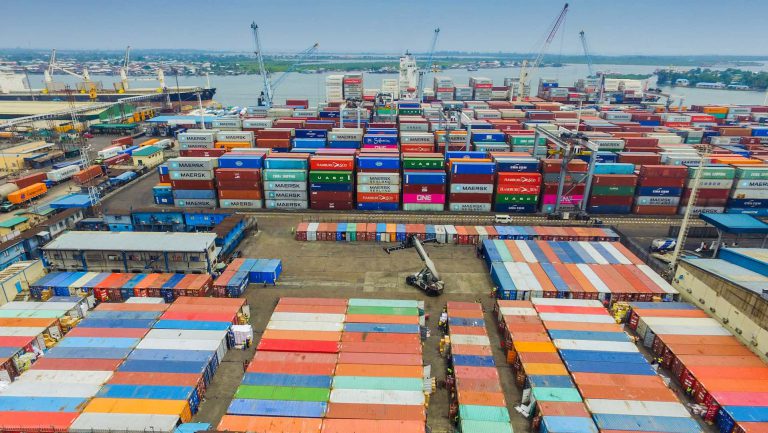
He added that the Port of Ondo Deep Seaport would play a critical role in unlocking the South-West’s solid mineral resources and agro-allied industries. By establishing a new logistics and export corridor, the port is expected to position Ondo State as an emerging centre for trade and industrial activity.
On the power project, Ewalefoh described the Katsina-Ala Hydropower Plant as a landmark investment in Nigeria’s renewable energy journey. He said the 460MW facility would help ease the country’s long-standing electricity shortfall while harnessing its vast hydropower potential. The project, valued at about $878 million, is expected to provide stable base-load power to the national grid and stimulate economic growth across its host region, while supporting a cleaner and more sustainable energy mix.
The latest approvals follow earlier PPP clearances granted in November, including the Product Authentication and Tracking System, the V-PASS contactless biometric verification platform, and the concession of the Port Harcourt International Airport. Those projects alone attracted an additional $230.9 million in private investment.
With the most recent decisions, the number of PPP projects approved in 2025 has now risen to more than 13, covering sectors such as maritime, aviation, health, power, and industrial infrastructure. Other initiatives endorsed this year include the MediPool project under the Ministry of Health, NIMASA’s Maritime Electronic Management System, the Ikere Gorge 6MW Hydropower Plant, the Borokiri Coastal Fisheries Terminal, the Farin Ruwa 20MW Hydropower Project, and the concession of Enugu International Airport.
Ewalefoh praised President Tinubu for his consistent backing of the ICRC, noting that the administration’s focus on strengthening regulatory institutions has enhanced the Commission’s capacity to drive PPP development effectively. He said the steady stream of approvals reflects growing trust in the ICRC’s mandate and its role in delivering value through transparent and well-structured partnerships.
As public revenues remain constrained and infrastructure needs continue to grow, Nigeria has increasingly embraced PPPs as a practical solution to bridge its infrastructure gap. With annual infrastructure funding requirements estimated at around $100 billion, the strategy underscores the government’s intention to shift the burden of financing major projects to the private sector, while ensuring strong regulation to attract sustainable, long-term investment.