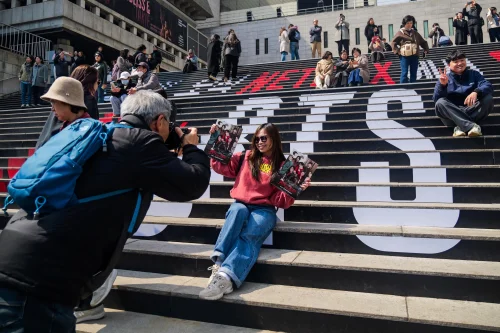


After nearly four years away from the stage while completing their mandatory military service, K-pop sensation BTS is set to make a grand return with a highly anticipated concert in Seoul this Saturday, drawing an expected crowd of around 260,000 fans. The performance marks their first live show since the hiatus and precedes an 82-date world tour that spans 23 countries.
The excitement surrounding the comeback intensified on Friday as BTS released their fifth studio album, “ARIRANG,” just a day before the concert. The release comes amid concerns over leader RM’s ankle injury, sustained during rehearsals. Medical staff advised the 31-year-old singer to wear a cast and limit physical activity for at least two weeks. However, Big Hit Music, BTS’s management, confirmed that RM is determined to participate, with certain performance elements, particularly choreography, restricted to ensure safety.
“ARIRANG,” a 14-track album named after a Korean folk song about longing and separation, reflects the group’s roots and identity. BTS member Jimin, 30, explained that the album embodies a thoughtful exploration of their identity as a fully Korean group and a desire to express themselves authentically through music and performance. The album has already set records on streaming platforms, with over five million pre-saves on Spotify, underscoring the global anticipation.
Fans around the world have eagerly embraced the release. Ces-Marie Hilo, 40, from the United States, shared her excitement, noting how the album blends elements of Korean heritage with innovative sounds spanning multiple genres. The group’s influence extends far beyond music, forming a central part of the Korean cultural wave that has garnered international attention through Oscar-winning films like “Parasite,” hit dramas such as “Squid Game,” and Korean literature, cosmetics, and cuisine.
Seoul itself has transformed in anticipation of the concert. Hotels were booked weeks in advance, streets are adorned with purple-and-blue “Welcome BTS & ARMY” banners celebrating the group’s fandom, and pop-up stores selling hoodies, wallets, figurines, and other merchandise have drawn thousands of visitors. Fans from around the globe, including the Philippines and Peru, gathered near the concert site, some unable to secure tickets but determined to experience the atmosphere.
The concert, taking place at the historic Gwanghwamun Square near Gyeongbokgung Palace, combines modern spectacle with a location steeped in history, from royal dynasties to major political demonstrations. For fans unable to attend in person, Netflix will livestream the performance worldwide, marking the streaming platform’s largest live musical event to date.
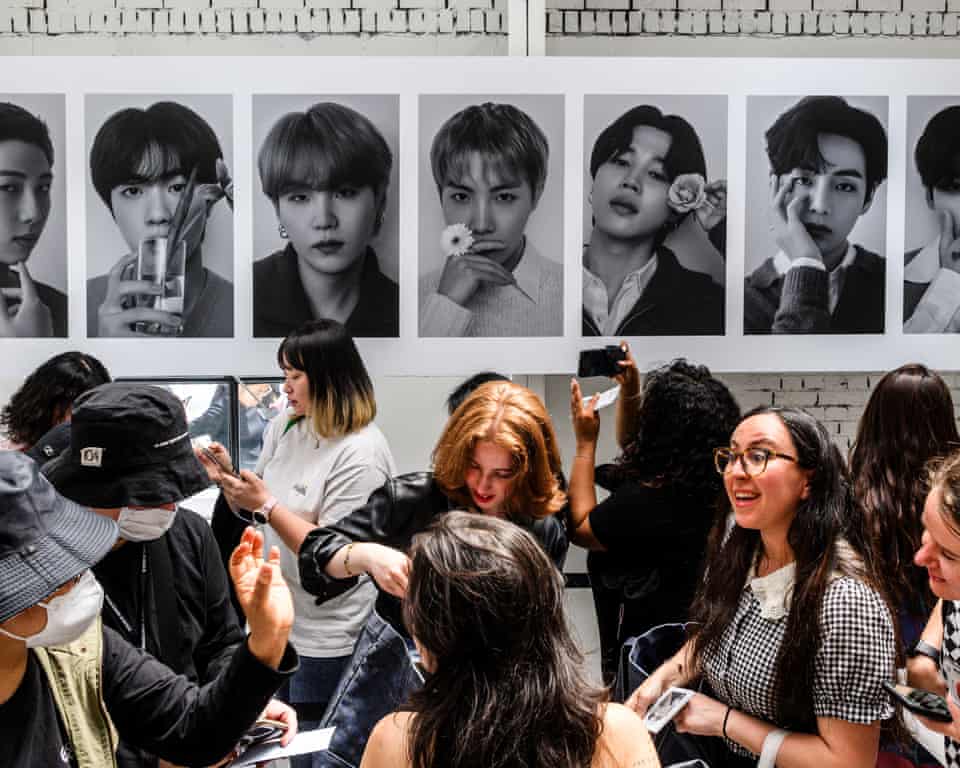
“ARIRANG” has already achieved remarkable commercial success. Big Hit Music reported that the album sold nearly four million copies on its first day alone, according to the Hanteo Chart. The album, hailed as a “love letter” to South Korea, has further elevated the anticipation surrounding BTS’s return. Billboard K-pop columnist Jeff Benjamin suggested that the band’s cultural and musical impact may eventually be remembered alongside icons like The Beatles or Michael Jackson.
BTS’s return is not only a cultural event but also a significant economic phenomenon, sometimes referred to as “BTSnomics.” Analysts predict that the 82-date, 23-country world tour could generate revenue surpassing that of major global acts like Taylor Swift. SooCheong Jang, a tourism professor at Purdue University, highlighted the ripple effects of BTS’s performances, noting how international fans travel and spend on accommodations, food, and merchandise, amplifying economic impact far beyond ticket sales.
IBK Investment & Securities analyst Kim Yu-hyuk estimates that at least six million fans will attend the tour, with ticket sales and merchandise generating a conservative estimate of 2.9 trillion won ($2 billion). Merchandise ranges from glow sticks and blankets to beauty devices and novelty items like tuna cans and toothbrush sets, which have sold out rapidly in pop-up stores and duty-free shops across Seoul. Shinsegae Duty Free reported a 430 percent increase in BTS-related product sales in the week leading up to the concert.
BTS’s economic influence extends across multiple intellectual property domains, including copyright, trademarks, and design rights. Dal Yong Jin, a professor of culture and digital technology at Simon Fraser University, emphasized that BTS has created a diversified economic model through music, merchandise, games, and media, generating both cultural and financial value.
The phenomenon of BTS has further contributed to a surge in tourism to South Korea. Yonhap News Agency reported a 30 percent rise in foreign visitors in the first half of March compared with the previous year. Data from Hotels.com cited by HYBE, BTS’s agency, showed that searches for accommodations in Seoul surged by 160 percent within 48 hours of the tour announcement, while Busan experienced a 2,400 percent increase. Stanford sociology professor Gi-Wook Shin noted that BTS has helped propel the broader “K-everything” wave, encompassing K-pop, K-drama, cuisine, fashion, and beauty, with measurable cultural and economic ripple effects worldwide.
In summary, BTS’s comeback concert and album release are not just entertainment milestones—they represent a fusion of cultural pride, global fandom, and economic influence. From the historic setting in Seoul to the worldwide livestream on Netflix, the group’s return is a landmark event that reflects both the evolution of K-pop and its global resonance. As ARMY and new fans gather to celebrate the band, the impact of BTS’s music, identity, and cultural footprint continues to grow, solidifying their status as one of the most influential musical acts of this generation.