


Nigeria’s relationship with money is deeply rooted in experience rather than theory. In a country that has witnessed bank failures, sudden currency changes, inflation shocks, and recurring economic instability, financial trust is not something people give lightly. It is something that is built slowly over time through repeated, dependable interactions. That reality is essential to understanding why, despite the rapid expansion of fintech platforms and mobile payment systems, cash still remains the first choice for many Nigerians.
Over the past few years, Nigeria’s digital payment ecosystem has expanded at an impressive pace. Fintech companies such as Opay, Palmpay, and Moniepoint have played a major role in bringing millions of previously unbanked or underbanked people into the formal financial system. At the same time, the Central Bank of Nigeria has consistently promoted a cashless economy, especially after the naira redesign policy in 2023 forced many people to rely heavily on digital channels. On paper, the progress is undeniable. Usage has increased, adoption has widened, and digital transactions now form a significant part of daily commerce.
However, adoption does not automatically translate into trust.
Across cities, towns, and even rural areas, many users share similar experiences with digital payment failures. A customer transfers money at a point-of-sale terminal, only for the merchant to insist that no alert has been received. The buyer’s account, meanwhile, has already been debited. What follows is usually a tense waiting period, sometimes lasting hours or days, before a reversal is processed. In some cases, the customer ends up paying twice just to avoid conflict or embarrassment. These kinds of incidents are not rare exceptions; they are frequent enough to shape how people behave.
Because of this, Nigerians have developed informal coping mechanisms. Some people deliberately keep physical cash aside as a backup for when digital systems fail. Others avoid making transfers in crowded or high-pressure environments where disputes would be uncomfortable. Many simply prefer cash for everyday transactions, reserving digital payments only for situations where they feel more secure. These behaviours are not signs of rejection of technology. Rather, they are signs of cautious participation.
At the heart of the issue is not ignorance or resistance to innovation. It is lived experience. People are not unaware of digital payment systems; they use them regularly. The challenge is that they do not always trust the systems to function smoothly when it matters most.
Several structural factors contribute to these challenges. Reliable digital payments depend heavily on stable electricity, strong internet connectivity, and efficient backend banking infrastructure. In Nigeria, these systems are still developing and often struggle to keep up with demand. When transaction volumes surge—such as during salary periods, festive seasons, or major sales events—the weaknesses become more visible. Payments delay, alerts fail to arrive on time, and systems sometimes become temporarily unresponsive.
Regulatory and infrastructure bodies have acknowledged the growing volume of electronic transactions, but the increase in usage has also been matched by a rise in complaints. As more people join the digital economy, the number of reported transaction failures naturally increases as well. For the average user, repeated exposure to these disruptions reinforces hesitation. When systems are perceived as unreliable, cash becomes the safer fallback option.
One of the most significant moments that exposed these weaknesses was the naira redesign period in 2023. The policy removed old currency notes from circulation faster than new ones could be fully distributed, forcing millions of Nigerians to rely almost entirely on electronic payments. It should have been the moment that cemented confidence in a cashless economy. Instead, it revealed the system’s limitations.
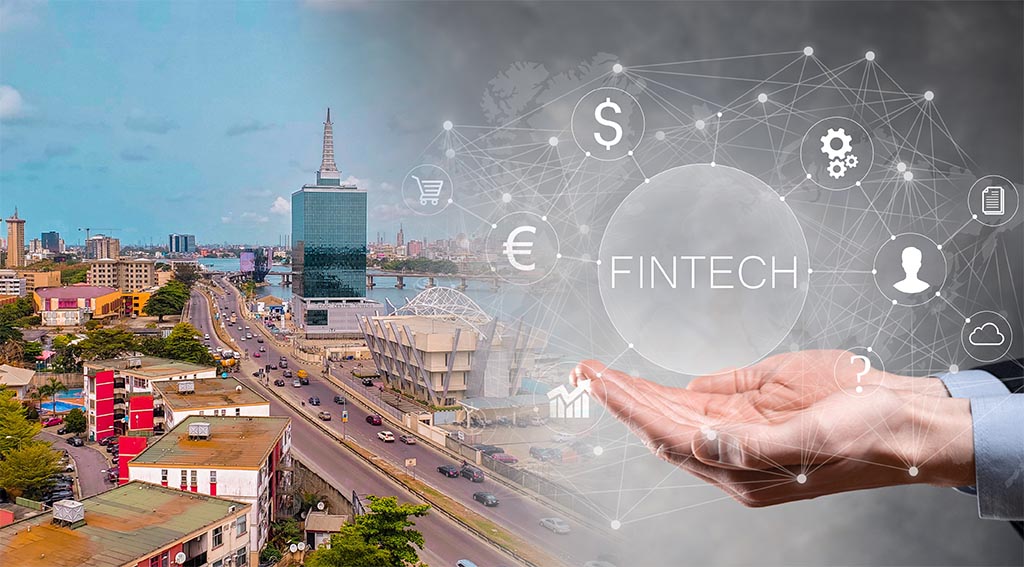
During that period, digital payment platforms experienced severe strain. Transaction failures became widespread, delays were common, and double debits occurred in some cases. Traders and service providers, frustrated by uncertainty, often refused digital payments altogether because they could not confirm whether funds had actually been received. What was intended as a push toward financial modernization ended up reinforcing existing doubts. Instead of building trust, the experience damaged it.
The impact of that period continues to linger because trust, once shaken, takes time to rebuild. Financial behaviour is heavily influenced by memory. When people recall failed transactions or unresolved issues, those experiences shape future decisions more than official assurances or policy intentions.
Despite these challenges, the fintech sector in Nigeria has made meaningful progress in improving everyday financial access. In many communities, fintech platforms have done what traditional banks struggled to achieve for years. Small traders, transport operators, and informal business owners who previously had little or no interaction with formal banking systems now actively use digital wallets for daily transactions. This shift has been driven largely by simplicity, accessibility, and faster customer support in some fintech services.
One key advantage fintech companies have demonstrated is proximity to users. Agent networks operating within local communities allow people to deposit, withdraw, and resolve issues without needing to visit bank branches. In contrast, many traditional banks still rely heavily on centralized systems, which can feel distant and difficult to navigate. When problems occur, users often face long waiting times, complicated complaint processes, or unsatisfactory responses from customer service channels.
That said, fintech platforms are not without their own flaws. System downtime, regulatory compliance pressures, and occasional service disruptions still occur. However, their willingness to focus on speed of resolution and user experience has helped shift expectations in the market. People are now more sensitive to how quickly problems are resolved, not just whether they occur.
Even with these improvements, cash continues to play a dominant role in everyday transactions. But its dominance is no longer absolute. Younger Nigerians, in particular, are increasingly comfortable with digital payments for transport, online shopping, subscriptions, and other services. The trend clearly shows a gradual shift toward a cashless economy.
Still, the transition is not simply about technology adoption. It is about confidence. Trust is built when users repeatedly experience smooth transactions without disruptions or uncertainty. It is strengthened when failures are rare, clearly explained, and quickly resolved. And it is sustained when systems perform reliably under pressure.
Nigeria’s fintech industry has already demonstrated strong growth potential, supported by innovation, competition, and increasing demand for digital services. The next stage of development, however, will not be defined by how many people sign up for digital wallets. It will be defined by how many people feel safe enough to rely on them completely.
When that level of confidence is achieved, cash will not disappear overnight. But its role will steadily diminish—not because it was forced out, but because people no longer feel the need to keep it as a backup.