

With most of the matches for the 2026 FIFA World Cup scheduled to take place in the United States, growing political tensions are beginning to cast a shadow over the tournament. Of the 104 games planned, 78 are set to be hosted on U.S. soil, alongside co-hosts Canada and Mexico.
Germany is now openly debating whether participation in the competition should be reconsidered. The discussion follows escalating diplomatic strains linked to the actions and statements of United States President Donald Trump, which have unsettled several European nations.
A senior figure within the German Football Association (DFB) has suggested that the moment has arrived for a serious and open conversation about a potential boycott of the World Cup. Speaking to BBC Sport, DFB vice-president Oke Göttlich said recent developments make it impossible to ignore the political environment surrounding the tournament.
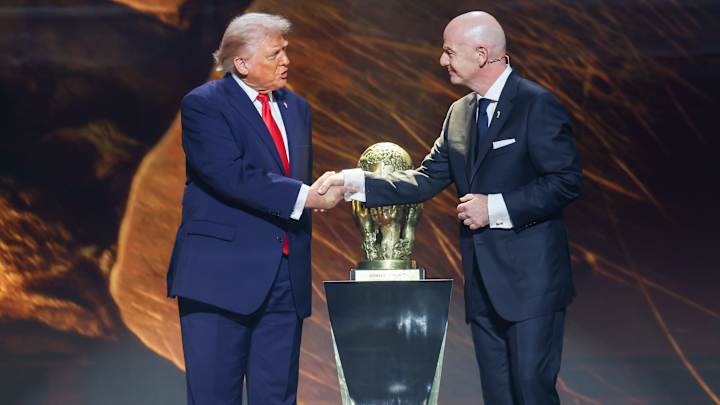
Relations between the United States and parts of Europe have been under pressure after President Trump made controversial comments, including suggestions about acquiring Greenland, a territory governed by Denmark. The situation intensified when he threatened to introduce trade tariffs against eight European countries, among them Germany, for opposing the proposal. Although the tariff threat was later withdrawn, the episode left lingering diplomatic unease.
Göttlich believes these tensions raise fundamental questions about whether Germany should take part in a tournament largely hosted by the U.S. “I genuinely ask myself when we should begin discussing a boycott in concrete terms,” he said. “For me, that point has already been reached.”
Not all European football authorities share Germany’s growing concern. France has indicated it does not currently support the idea of a boycott, while the Danish Football Association acknowledged the sensitivity of the situation but stopped short of taking a firm position. Denmark is still battling for qualification through the play-off stages.
Drawing on historical precedent, Göttlich compared the current climate to the U.S.-led boycott of the 1980 Olympic Games in Moscow, which followed the Soviet invasion of Afghanistan. He argued that the perceived risks and political stakes today could be even more significant than those that prompted past sporting boycotts.
Germany’s football community is no stranger to political controversy at major tournaments. At the 2022 World Cup in Qatar, FIFA warned teams against wearing the OneLove armband, a symbol promoting inclusion and diversity. In protest, German players covered their mouths during a pre-match team photo, a gesture then-coach Hansi Flick described as a response to being “silenced.”
Reflecting on that incident, Göttlich criticised what he sees as inconsistency in how football addresses political issues. He questioned why some situations provoke strong reactions while others are treated as strictly off-limits.
He concluded by calling for clearer guidance from political leaders and football authorities alike, stressing the need to define boundaries and uphold shared values in an increasingly complex global landscape.