

A major political collaboration between the Labour Party’s 2023 presidential candidate, Peter Obi, and former Kano State governor Rabiu Musa Kwankwaso has reportedly reached a significant phase, with both men working toward presenting a joint presidential ticket ahead of the 2027 general election. Multiple insiders told reporters that the two politicians have not only agreed in principle but have also formed a committee to drive the alliance under the platform of the African Democratic Congress (ADC).
According to top ADC figures, the idea of bringing Obi and Kwankwaso together did not originate from either politician. Instead, it was former President Olusegun Obasanjo who first proposed the political partnership, and he has since played an active role in persuading both men to adopt the plan. The former president, who openly campaigned for Obi during the 2023 election, is said to have endorsed Obi’s move to the ADC and advised him to join forces with Kwankwaso to secure the presidential and vice-presidential slots of the party.
Obasanjo’s support for Obi in 2023 was well documented. In his open New Year letter in January 2023, the former president described Obi as having an edge over other candidates due to what he called Obi’s discipline, capability, and understanding of governance. He wrote that none of the candidates was perfect, but that Obi, whom he described as his “mentee,” stood out. The endorsement gave Obi a boost among younger voters, civil society groups, and the religious community.
Kwankwaso, for his part, also shares a political history with Obasanjo. During Obasanjo’s second term in office, he appointed the former Kano governor as Minister of Defence. But while Obasanjo appears enthusiastic about Obi and Kwankwaso working together, he has not demonstrated the same level of support for his former vice president, Atiku Abubakar. Atiku, Obi, and former Minister of Transportation Rotimi Amaechi are currently the three notable presidential hopefuls within the ADC, while efforts to bring Kwankwaso formally into the party continue.
Before finalizing his move to the ADC, Obi reportedly indicated he would be willing to serve only a single presidential term if elected, a position that was understood to make room for Kwankwaso to play a major role in succession planning. Kwankwaso responded positively at the time, publicly stating that he was willing to run as Obi’s deputy if necessary.
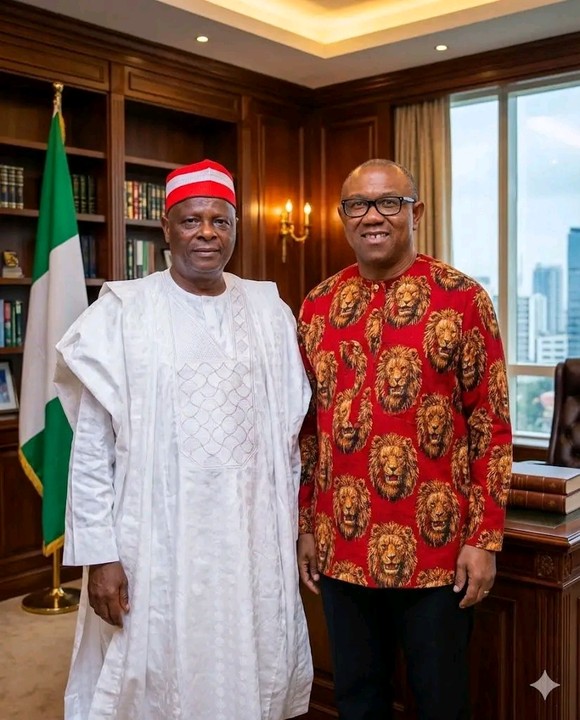
Though Kwankwaso has not yet formally joined the ADC, party insiders confirmed that Obasanjo has already begun reaching out to northern political power brokers to make the alliance acceptable in the North. One ADC official who asked not to be named said, “We know of the alliance even though Kwankwaso is not yet in the ADC. Former President Obasanjo linked the two and is helping to build acceptance among northern leaders because he strongly believes in Obi.”
Leaders of the Kwankwasiyya Movement, which forms Kwankwaso’s political base, also confirmed Obasanjo’s involvement. One senior figure stated that the former president initiated the discussion and that Kwankwaso’s camp welcomed the idea, describing it as being “on track.”
To drive the proposal, a joint committee made up of representatives from both sides was formed about a month ago. A senior member of Obi’s camp stated that the discussions had gone beyond theoretical talk. “A committee is already working,” the source said. “We are past the early negotiation stage.”
Confirming the development, Magaji Ibrahim, SAN, who serves as the National Legal Adviser of the New Nigeria Peoples Party (NNPP) and is a prominent Kwankwasiyya figure, said he is part of the committee and that the alliance has reached what he called “an advanced stage.” According to him, Kwankwaso is willing to work with Obi in any arrangement as long as the objective is national recovery. “We are willing to cooperate either for the first or second position,” he said. “The main goal is to salvage the country.”
He also revealed that discussions were ongoing regarding Kwankwaso’s possible defection to the ADC. While confirming that the party had made overtures to Kwankwaso, Ibrahim noted that the former governor is unlikely to settle for anything less than the vice-presidential slot if he joins the party.
Efforts to obtain direct comment from Obasanjo’s spokesperson, Kehinde Akinyemi, were unsuccessful, but a person close to the former president confirmed that Obasanjo is working behind the scenes to ensure the project succeeds. However, the source declined to share specific details.
Despite these developments, the ADC leadership has tried to publicly distance itself from internal discussions between the two camps. ADC spokesperson Bolaji Abdullahi said the party had no formal knowledge of an alliance but described both politicians as valuable assets. He added that while Kwankwaso had not joined the ADC, the party would be open to receiving him.
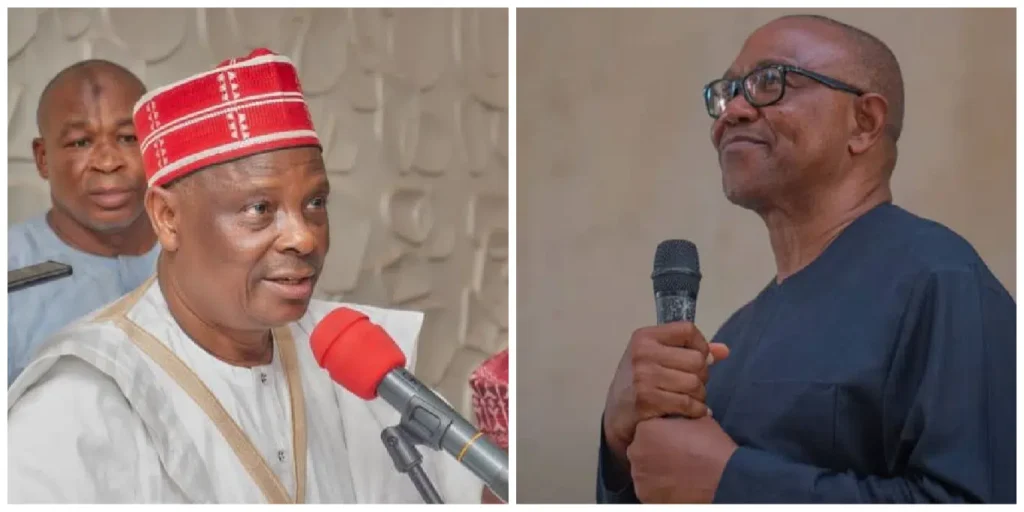
Meanwhile, Atiku Abubakar’s camp has downplayed the significance of the Obi-Kwankwaso development. His spokesperson, Paul Ibe, insisted that Atiku did not see the alliance as a threat and argued that political actors are free to pursue partnerships without being seen as competitors. According to Ibe, Atiku is focused on his own agenda and supports any initiative aimed at addressing Nigeria’s existential challenges.
While the political machinery continues on the side of the politicians, Obi’s supporters seem enthusiastic about the partnership. Yinusa Tanko, coordinator of the Obidient Movement, described the potential alliance as a strong political force if properly organised. According to him, discussions between both camps had been ongoing for some time, and combining the Obidient and Kwankwasiyya support bases could create a formidable national coalition ahead of 2027.
However, the alliance is unfolding amid internal debates within the ADC over zoning. Obi’s supporters within the party are pushing for the presidential ticket to be zoned to the South, arguing that it would give the coalition a realistic route to defeating President Bola Tinubu, who is expected to seek a second term. A top ADC figure sympathetic to Obi said that zoning the ticket to the South would make strategy easier, especially as the North could then produce the vice-presidential candidate under the new alliance.
But the zoning proposal has met resistance from several ADC state chairmen. Leaders from states including Kogi, Edo, and Adamawa warned that zoning the ticket could weaken the coalition and give Tinubu an advantage. They argued that any attempt to tailor the ticket to a particular region or aspirant reflected narrow interests rather than national ones. The Adamawa chairman described such advocacy as “myopic,” insisting that Nigeria needed a strong unifying leader rather than regional bargaining.
As 2027 inches closer, the unfolding Obi-Kwankwaso-Obasanjo political manoeuvring is drawing increasing attention across Nigeria’s political landscape. While much remains fluid, analysts believe that if successfully negotiated, the alliance could reshape opposition politics and potentially challenge the dominance of the ruling All Progressives Congress.