


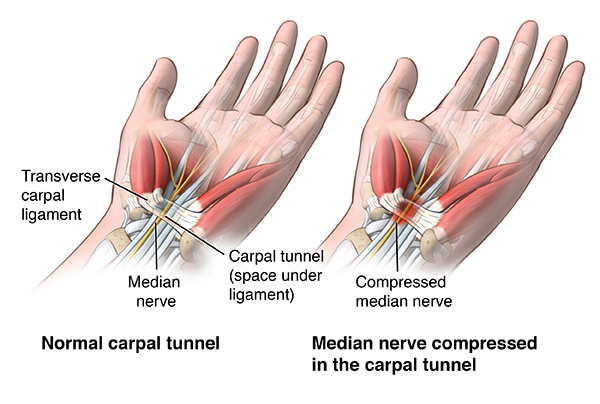
Carpal tunnel syndrome (CTS) is a prevalent medical condition that primarily affects the hand and wrist, resulting in symptoms such as pain, numbness, tingling, and sometimes weakness. This condition arises when the median nerve—a crucial nerve that runs from the forearm into the hand—becomes compressed as it passes through a narrow passageway in the wrist known as the carpal tunnel. This tunnel is a tight space formed by the wrist bones and a tough ligament, and when the median nerve is squeezed inside it, communication between the brain and parts of the hand is disrupted, leading to the characteristic symptoms of CTS.
Anatomy of the Carpal Tunnel
To better grasp the nature of carpal tunnel syndrome, it helps to visualize the wrist’s anatomy. The carpal tunnel is roughly the size of a thumb and lies at the base of the palm where the wrist meets the hand. The floor and sides of this tunnel are created by small wrist bones called carpal bones, while the roof is formed by the transverse carpal ligament, a strong band of connective tissue.
Within this confined space travel the median nerve along with nine tendons responsible for bending the fingers. These tendons and the nerve are all delicate structures that require adequate room to function correctly. When the space within this tunnel decreases or pressure increases, the median nerve becomes compressed, which impairs its ability to transmit signals properly. A helpful analogy is to think of the carpal tunnel like a garden hose carrying water (the nerve signals). If someone steps on the hose, the water flow is restricted—similarly, pressure on the median nerve impedes nerve signals, causing symptoms to appear in the hand.
Causes and Risk Factors
Several factors can contribute to the development of carpal tunnel syndrome, mostly centered around increased pressure inside the carpal tunnel. Repetitive hand and wrist movements, particularly those involving force or vibration, are common culprits. Activities like typing for long hours, operating vibrating tools, or performing repetitive assembly line work may increase the risk.
Anatomical differences also play a role. For example, women generally have a smaller carpal tunnel space, making them more susceptible to CTS than men. Medical conditions such as diabetes, rheumatoid arthritis, and hypothyroidism can cause inflammation or swelling that further compress the median nerve. Hormonal changes during pregnancy and menopause, as well as fluid retention linked to obesity, can increase pressure inside the tunnel. Wrist injuries, including fractures or sprains, can reduce the tunnel’s size or cause swelling, contributing to nerve compression. Family history is also important; individuals with close relatives who have CTS may have a higher chance of developing the condition.
In today’s digital age, concerns about prolonged use of computers, smartphones, and tablets have grown. However, current research shows mixed results about their direct link to carpal tunnel syndrome. Such device use more often leads to general wrist and hand discomfort or tendon inflammation rather than true nerve compression. Still, these activities can aggravate existing CTS symptoms.
Symptoms to Watch For
Carpal tunnel syndrome often starts subtly, with symptoms worsening over time. Many patients first notice discomfort during the night, likely because sleeping positions tend to flex the wrists, increasing pressure on the median nerve.
Typical symptoms include numbness, tingling, or a “pins and needles” sensation in the thumb, index finger, middle finger, and the half of the ring finger closest to the middle finger. These fingers correspond to the area served by the median nerve. Interestingly, the little finger is usually not affected because its sensation is supplied by a different nerve.
Patients may describe the sensation as if their hand has “fallen asleep,” or as if blood flow to the fingers is impaired. Some report aching or burning pain that can extend from the hand up the forearm. In more advanced cases, muscle weakness develops, particularly in the thumb, which can lead to dropping objects or difficulty gripping. Another sensation that some people experience is a feeling of tightness or swelling in the hand, even though there may be no visible swelling.
Diagnosing Carpal Tunnel Syndrome
The diagnosis of CTS involves gathering a detailed patient history and conducting a physical examination focused on the hand and wrist. One of the key indicators is the pattern of finger involvement — affecting the thumb, index, middle, and part of the ring finger, but sparing the little finger.
Several physical tests can help confirm the diagnosis:
- Tinel’s Sign: The doctor gently taps over the median nerve at the wrist. If tingling or “electric shock” sensations occur in the fingers, the test is positive.
- Phalen’s Maneuver: The patient is asked to hold their forearms upright and flex the wrists downward for about one minute. Reproduction of symptoms during this test supports the diagnosis.
- Thumb Muscle Strength: Assessment of thumb strength helps identify any muscle weakness caused by nerve compression.
- In more advanced healthcare settings, further tests may be conducted to confirm CTS and assess severity:
- Nerve Conduction Studies (NCS) and Electromyography (EMG): These tests measure the speed and strength of electrical signals traveling through the median nerve and evaluate muscle activity. They are considered the gold standard for confirming CTS.
- Imaging Tests: Ultrasound or MRI scans can visualize the median nerve and surrounding tissues, helping rule out other causes of symptoms.
Treatment Approaches
Treatment for carpal tunnel syndrome depends on how severe the symptoms are and how long they have been present. Generally, approaches start conservatively, reserving surgery for cases that do not improve or worsen.
Non-Surgical Treatments
- Wrist Splinting: Wearing a splint that holds the wrist in a neutral position, especially at night, helps prevent wrist bending that increases pressure within the carpal tunnel. This is often the initial step in treatment.
- Activity Modification: Identifying and reducing or modifying activities that exacerbate symptoms is crucial. This may include ergonomic adjustments at work, taking frequent breaks, and avoiding repetitive motions when possible.
- Medications: Over-the-counter anti-inflammatory drugs such as ibuprofen or naproxen may help reduce pain and swelling. In some cases, corticosteroid injections are administered directly into the carpal tunnel to reduce inflammation and provide relief. These injections are typically more effective when guided by ultrasound to ensure precise delivery.
- Physical Therapy: Specific exercises known as nerve gliding or tendon gliding exercises can help the median nerve move more freely within the tunnel, potentially reducing symptoms.
- Management of Underlying Conditions: Treating health issues like diabetes, hypothyroidism, or obesity can improve overall outcomes.
- Fluid-Reducing Medications: In some cases, medications that reduce body fluid retention might be recommended to decrease pressure in the carpal tunnel.
Surgical Treatment
When symptoms persist for more than three to six months despite conservative treatment, or when there is significant muscle weakness or nerve damage, surgery may be necessary. The surgical procedure, called carpal tunnel release, involves cutting the transverse carpal ligament to enlarge the space in the tunnel and relieve pressure on the median nerve.
There are two common surgical techniques:
- Open Surgery: Involves making a single incision in the palm to access and release the ligament.
- Endoscopic Surgery: Uses one or two small incisions and a tiny camera to guide the surgeon, potentially reducing recovery time and scarring.
Surgery is usually performed as an outpatient procedure. While numbness and tingling often improve rapidly after surgery, full recovery of strength may take weeks to months. In cases where nerve damage is severe or longstanding, some symptoms may persist.
Prevention and When to Seek Help
Though it’s not always possible to prevent carpal tunnel syndrome, certain measures can reduce the risk or alleviate symptoms:
- Keep wrists in a neutral, straight position during activities, avoiding extreme bending or twisting.
- Use ergonomic equipment and ensure your keyboard and mouse are positioned at or slightly below elbow height.
- Use a gentle grip and minimize force when handling tools or typing.
- Take frequent breaks to stretch and rest your hands, especially during repetitive tasks.
- Keep hands warm in cold environments to reduce stiffness and improve circulation.
If you experience persistent numbness, tingling, or pain that disrupts sleep or daily activities, or notice weakness or muscle wasting around the base of the thumb, it is important to consult a healthcare professional. Early diagnosis and treatment are essential to prevent irreversible nerve damage.!